
Identity security insights for practitioners.
Analysis, research, and perspective from the 8Layers team — for security analysts, identity engineers, and governance professionals.


We raised €1M more. Here's how we'll use it to keep solving the problem from the core
€1 million more, €2.5 million in total, and two new investors from the financial sector backing our thesis. Here's what this extension means, and how we'll use it to keep solving identity security from the core
Read the article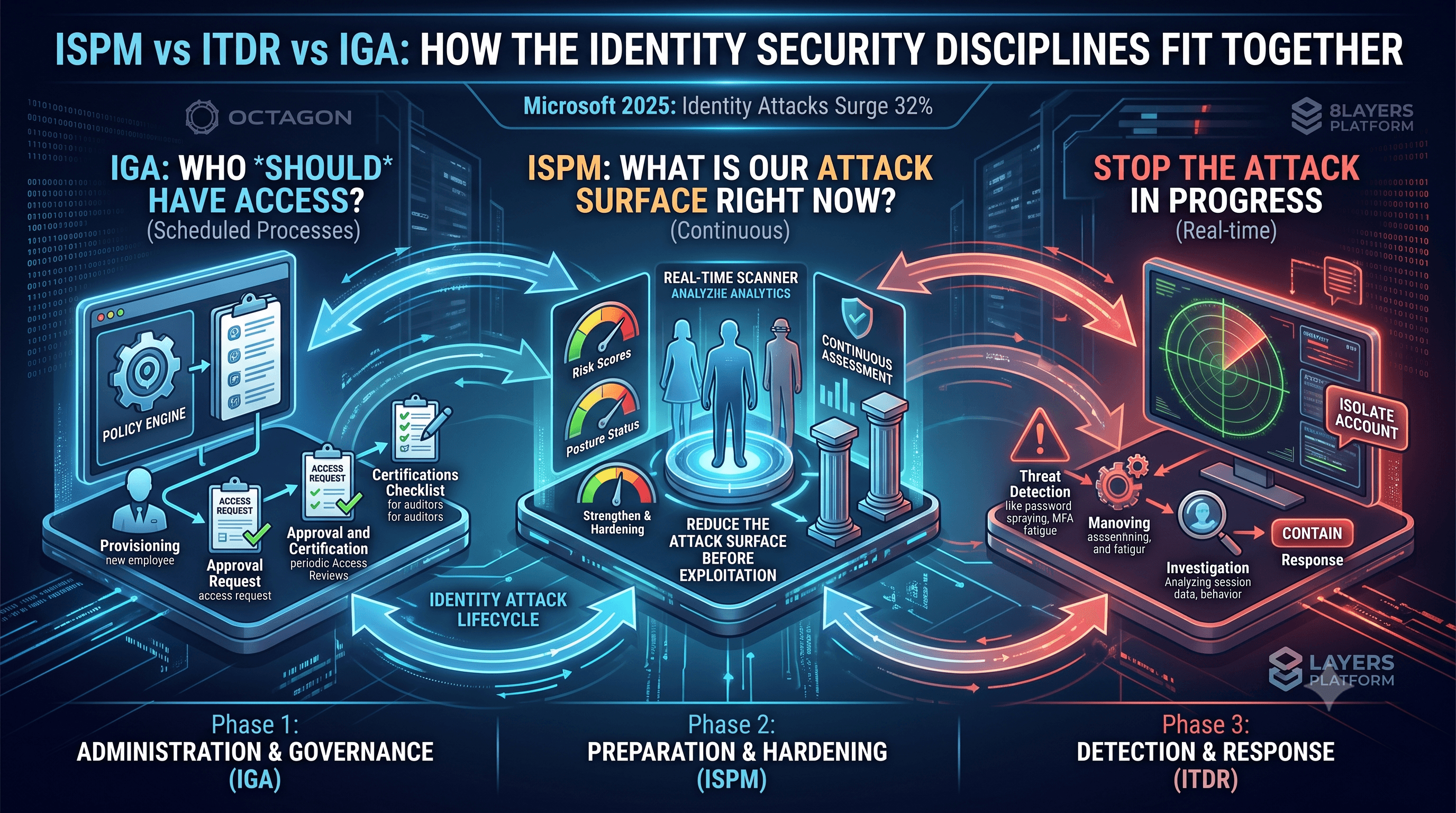
ISPM vs ITDR vs IGA: How the Identity Security Disciplines Fit Together
Ask three vendors to explain identity security and you will get three acronyms that sound almost interchangeable: ISPM, ITDR, and IGA. They are not interchangeable. Each solves a different problem, at a different phase of the identity attack lifecycle, using different inputs. In this article you´ll learn how to fit them together.
Read the article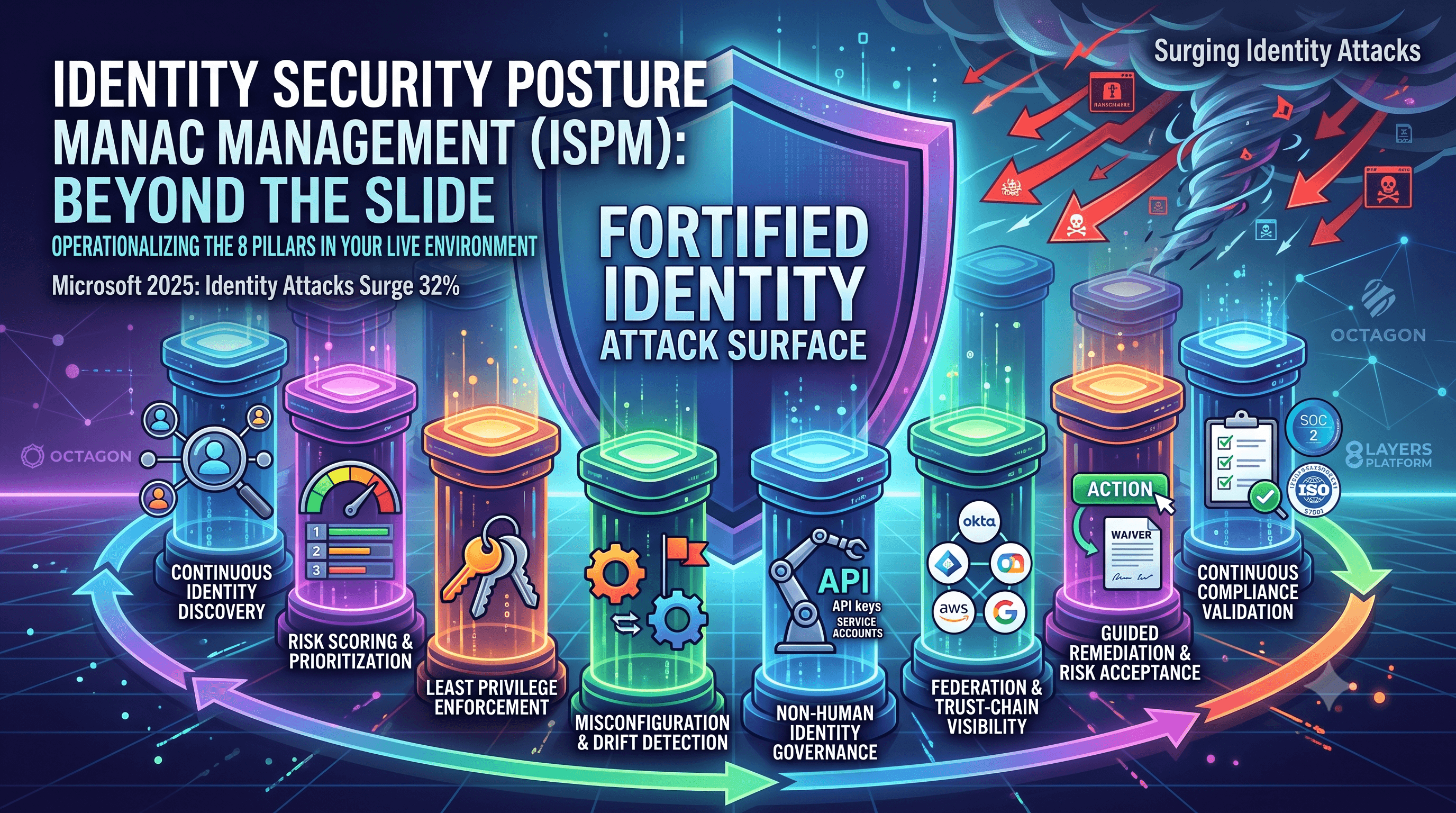
The 8 Pillars of ISPM: A Practical Implementation Framework
The urgency for ISPM is not abstract. Identity-based attacks surged 32 percent in the first half of 2025, and identity is now the surface attackers reach for first. This guide breaks Identity Security Posture Management into eight pillars. Think of them less as a checklist and more as the load-bearing structure of a program: skip one and the whole posture leans.
Read the article
What Is Identity Security Posture Management (ISPM)?
Identity attacks are surging. Discover what ISPM is and how it continuously finds and fixes misconfigurations before attackers can exploit them.
Read the article
What is Identity Threat Detection and Response (ITDR)
ITDR explained: what it is, why it matters, and how Thor's unbounded detection revolutionizes the way identity attacks are caught
Read the article
Why Your Security Tools Are Missing the Biggest Identity Risks (And How to Fix It)
Most security tools miss the biggest identity risks because they look at systems in isolation. Learn why cross-system visibility, continuous monitoring, and real-time threat detection are essential to closing the gaps attackers exploit.
Read the article